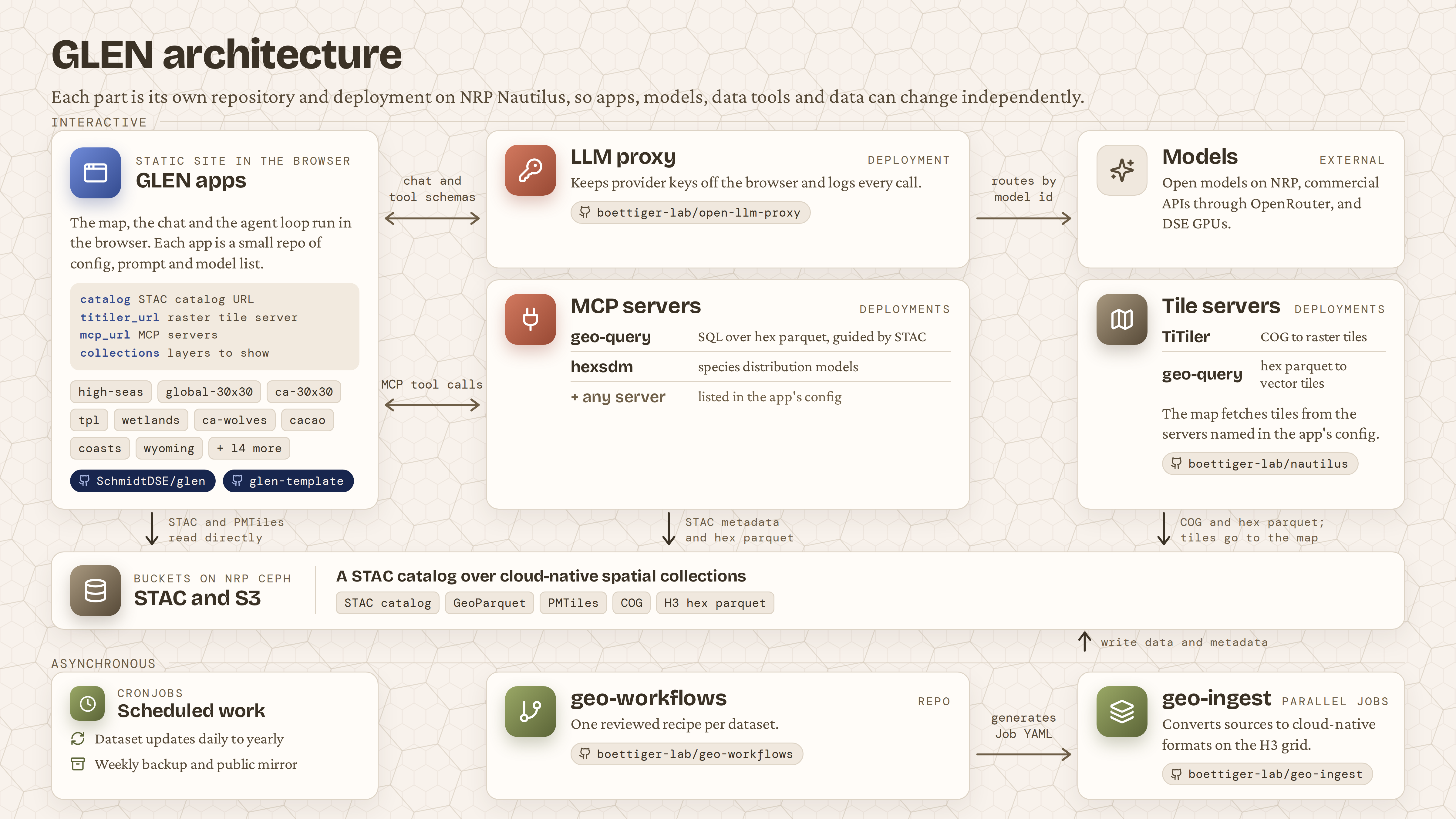
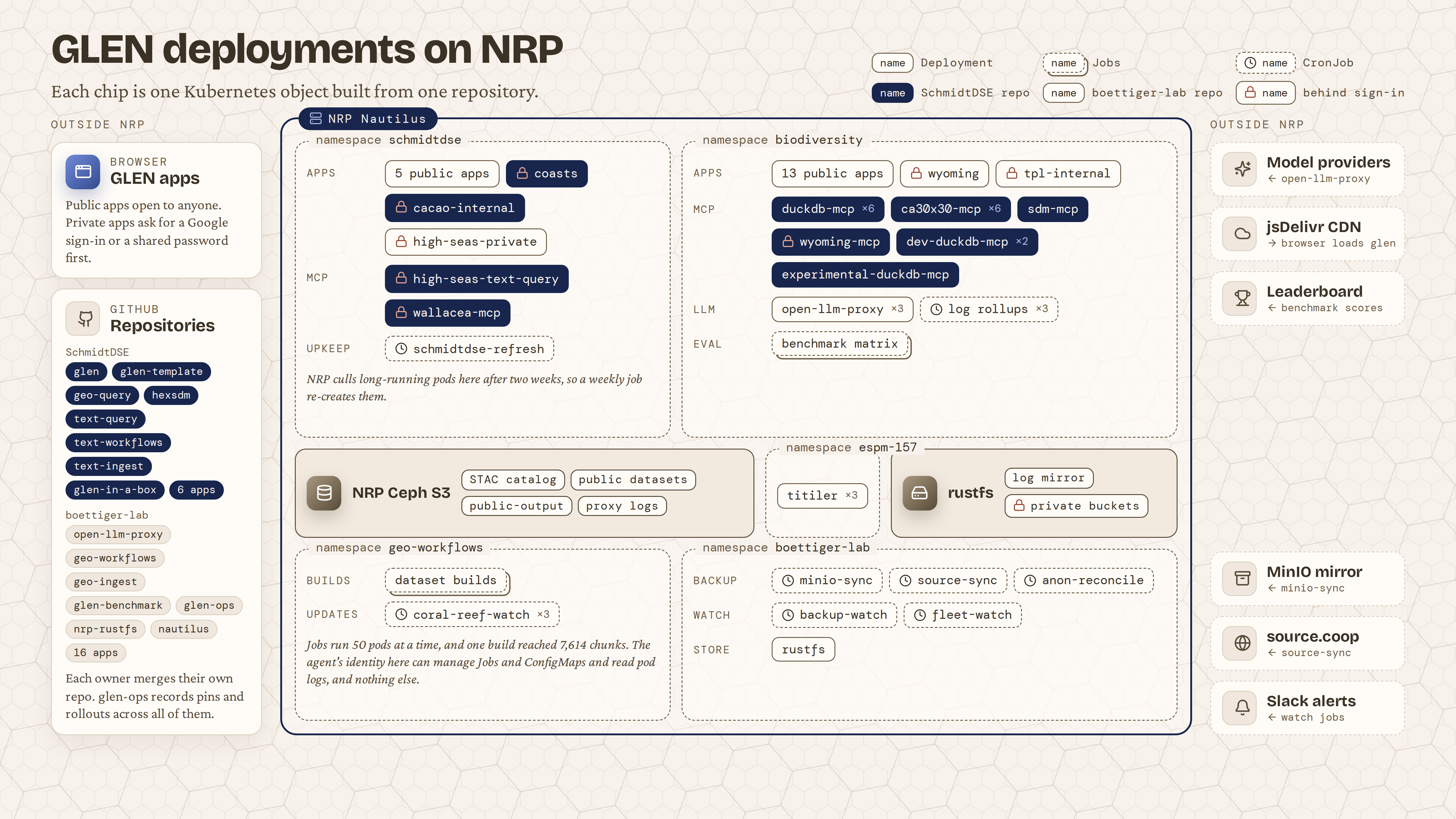
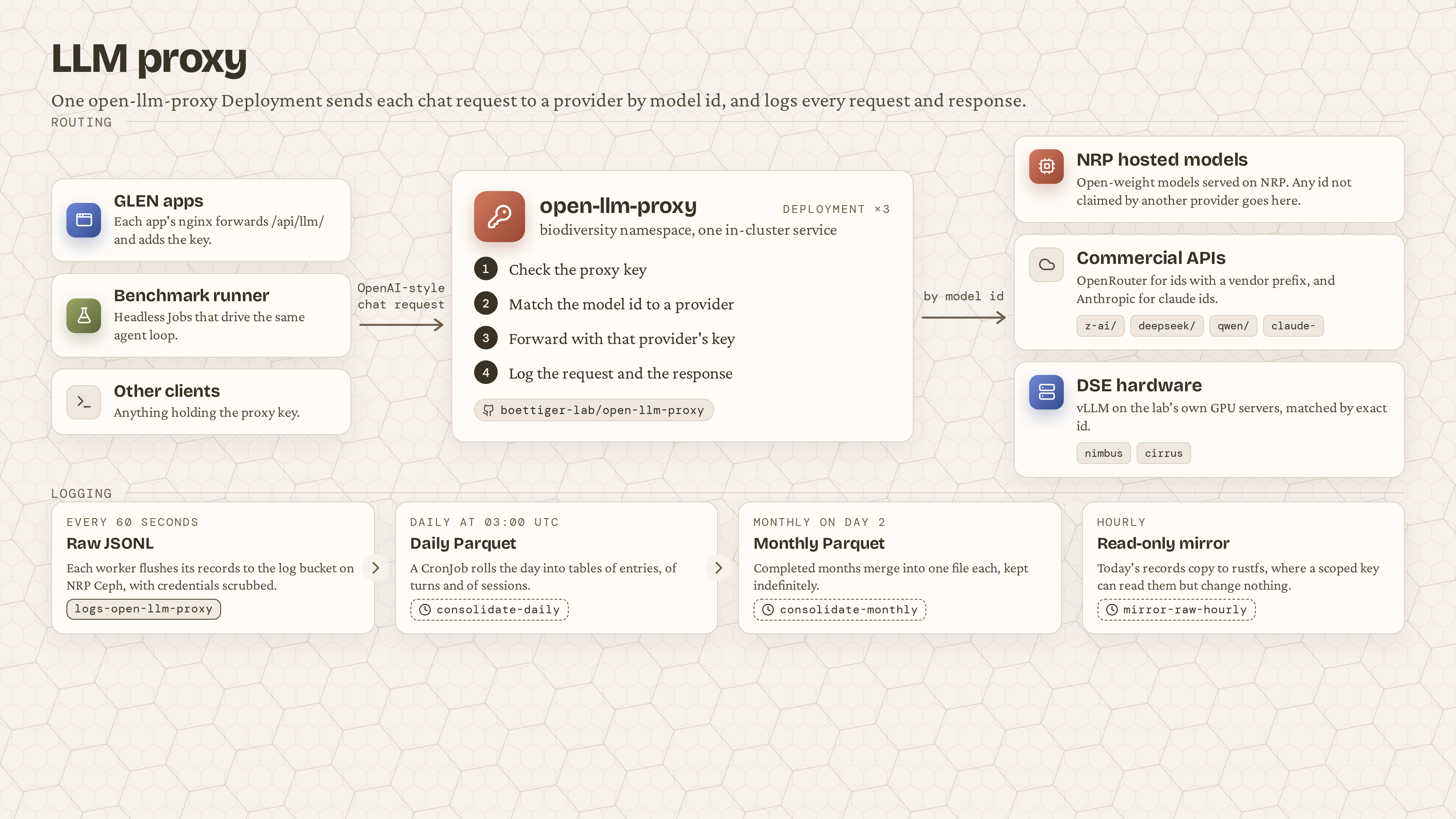
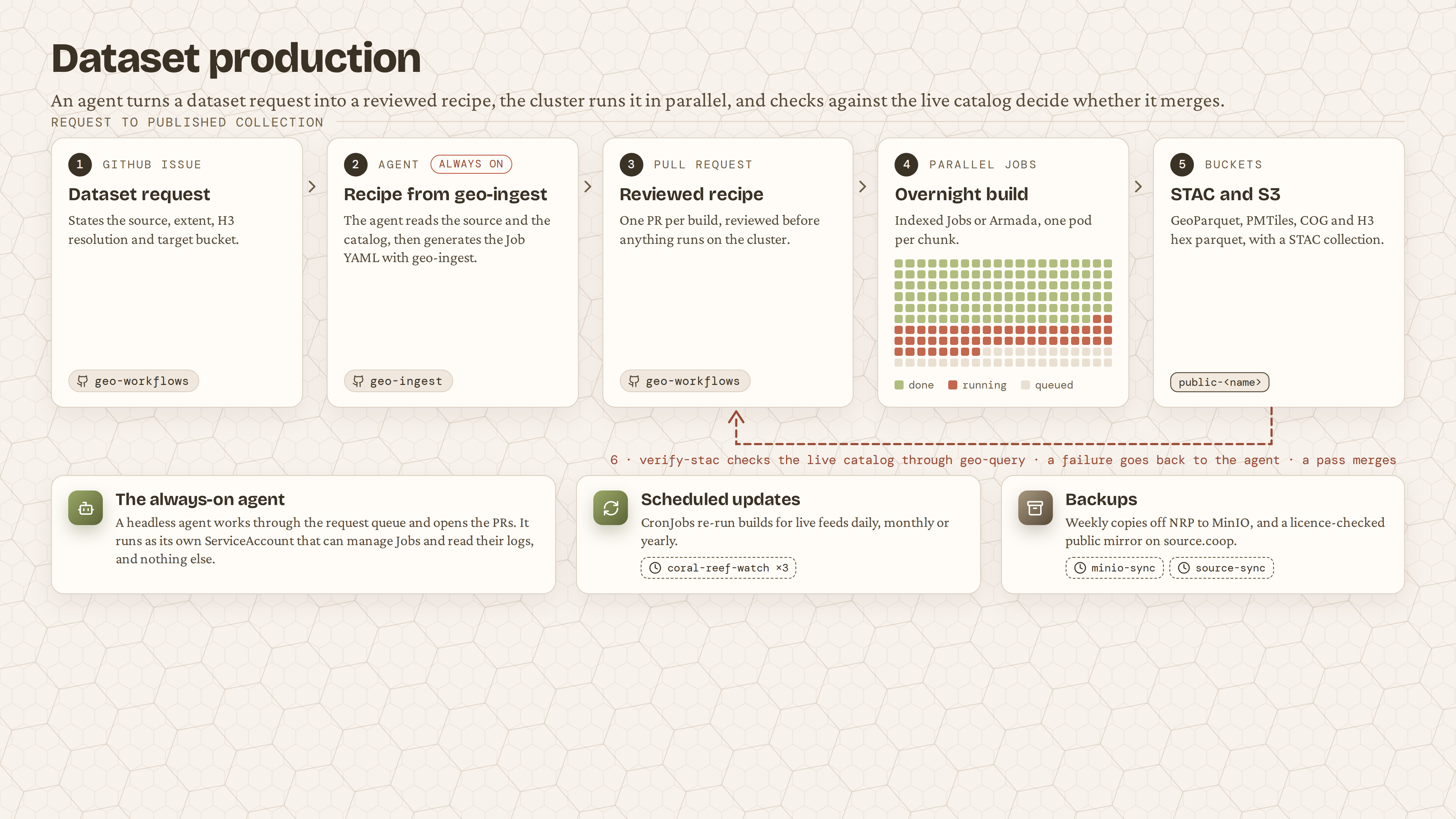
Six slides that present GLEN as a set of independent parts: an overview, the deployments by namespace, and one slide each for the LLM proxy, dataset production, the text stack, and the benchmark with glen-in-a-box.
The browser is the hub. It sends chat to the LLM proxy and tool calls to each MCP server directly, so a new MCP server only has to be listed in an app's config. Map layers bypass the agent: the browser reads STAC and PMTiles from S3 directly, and gets raster tiles from TiTiler and hex tiles from geo-query. Full size · PDF · PNG
Each chip is one Kubernetes object. The border shows its kind, the fill shows the GitHub org that owns its code, and a lock marks a private app or server behind sign-in. Full size · PDF · PNG
Routing goes by model id, to NRP by default, to OpenRouter or Anthropic by prefix, or to the DSE GPU servers by exact id. Every call lands in a tiered log. Full size · PDF · PNG
The validation loop runs from published output back to the pull request. Builds run 50 pods at a time per Job, and several builds overnight put hundreds of pods on the cluster. Full size · PDF · PNG
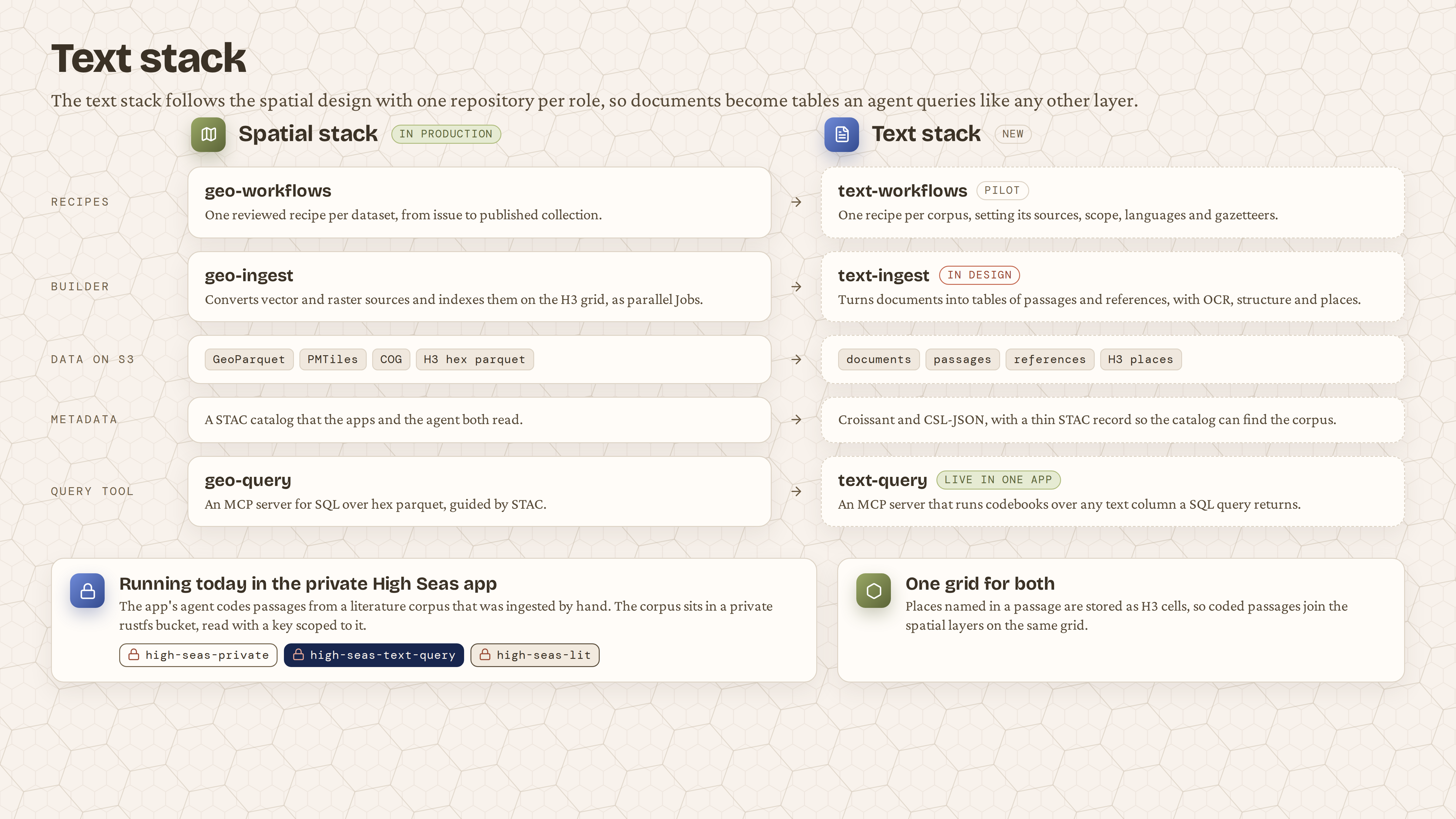
The text stack repeats the spatial design role for role. text-query already runs in the private High Seas app over a corpus ingested by hand, while text-ingest is still in design. Full size · PDF · PNG
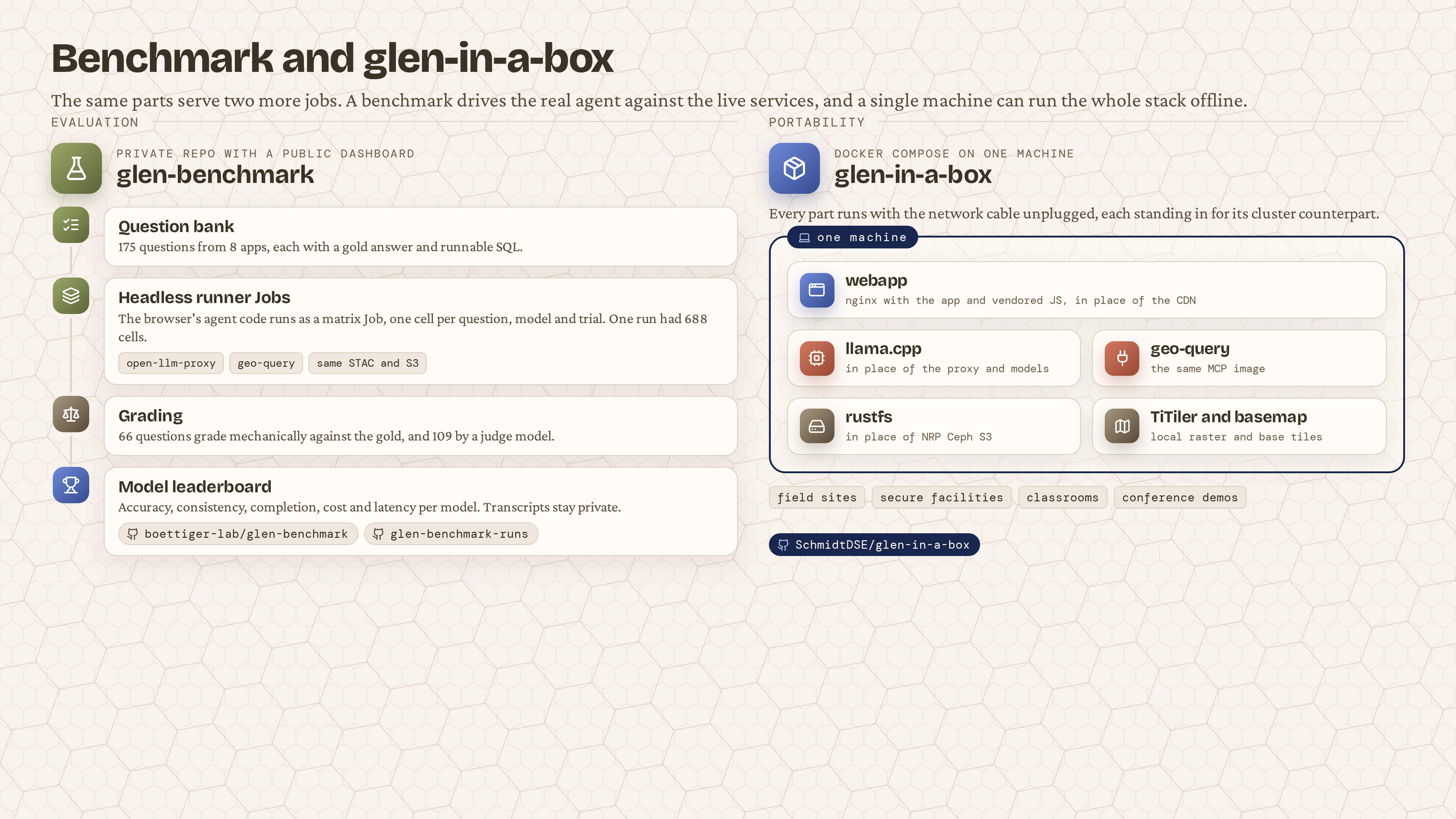
The benchmark exercises the live services with the same agent code as the browser. glen-in-a-box swaps each cluster part for a local container. Full size · PDF · PNG